
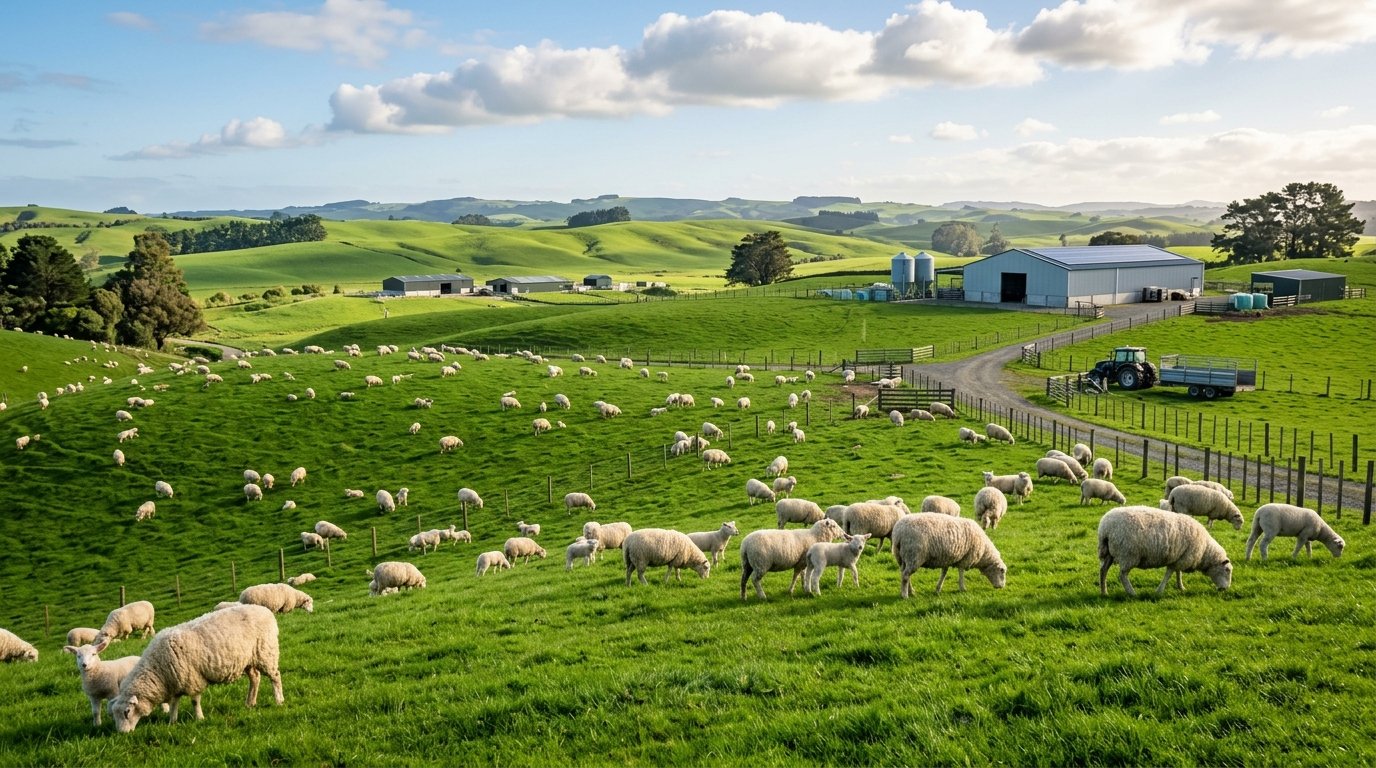
Sheep Stocking Rate
Calculator
Calculate the ideal stocking rate, pasture carrying capacity, and seasonal forage requirements in seconds. Explore 100+ precision calculators built for livestock managers worldwide.
Advanced Stocking Rate & Carrying Capacity Calculator
Input your pasture DM yields and flock metrics to derive sustainable head counts.
Pasture & Flock Parameters
Recommended Stocking Outputs
Pasture Forage Utilization Breakdown
Comparing Usable Pasture Dry Matter vs Total Flock Requirement over grazing duration
How The Stocking Calculator Works
Our calculation engine balances pasture biomass production against flock metabolic consumption using university extension research models.
Input Pasture Yields
Enter your total pasture acreage and estimated available Dry Matter (DM) per acre or hectare based on local clippings or plate meter readings.
Set Flock Parameters
Specify average sheep body weight, daily feed intake percentage, desired grazing duration, and target utilization rate (e.g. 50%).
Get Instant Action Plan
Receive recommended stocking density (head/acre), total carrying capacity, over/understocking alerts, and download a printable PDF report.
Key Farm & Financial Benefits
Prevent Overgrazing
Protect grass roots from starvation by respecting residual stubble heights, preventing weed infestation and soil erosion.
Maximize Lamb Gains
Ensure ewes and growing lambs receive peak digestible energy and crude protein to achieve optimal target growth rates.
Cut Winter Hay Costs
Extending the grazing season by just 30 days saves thousands of dollars in purchased hay and supplemental feed.
DSE Standard Support
Seamlessly convert dry ewes, rams, twin-lactating mothers, and cattle into standardized Dry Sheep Equivalents.
Stocking Rate Formula & Worked Example
The scientific model behind sheep carrying capacity balances Usable Forage Supply against Flock Forage Demand over a specified timeframe.
Primary Calculation Formula
1. Available Usable DM (kg)
= Area (ha) × DM Yield (kg/ha) × (Utilization % ÷ 100)
2. Head Feed Requirement (kg DM)
= Body Weight (kg) × Daily Intake % × Days
3. Carrying Capacity (Sheep)
= Usable DM ÷ Head Feed Requirement
Real Farm Scenario Worked Example
Scenario: A farm in Oregon has 50 acres (20.2 ha) of orchardgrass pasture yielding 2,400 kg DM/ha. The producer wants to graze 65 kg ewes in late pregnancy (3.2% intake) for 45 days with a target 50% utilization rate.
- Usable DM Supply: 20.2 ha × 2,400 × 0.50 = 24,240 kg DM
- Head Daily Demand: 65 kg × 0.032 = 2.08 kg DM/head/day
- 45-Day Head Demand: 2.08 × 45 = 93.6 kg DM/head
- Pasture Carrying Capacity: 24,240 ÷ 93.6 = 259 head
- Stocking Density: 259 head ÷ 50 acres = 5.18 sheep per acre
100+ Precision Livestock Calculators
Sheep Stocking Rate Calculator
Calculate the optimal head count of sheep per acre or hectare based on available pasture dry matter yield.
Sheep Grazing Calculator
Calculate pasture area requirements and total flock forage consumption during active grazing rotations.
Sheep Carrying Capacity Calculator
Calculate long-term biological carrying capacity and Dry Sheep Equivalents (DSE) your land can support.
Sheep Pasture Calculator
Calculate pasture dry matter production and seasonal forage growth budgets for sheep paddocks.
Sheep Paddock Size Calculator
Determine optimal individual paddock dimensions for intensive cell grazing and rotational moves.
Rotational Grazing Calculator
Determine optimal paddock counts, stocking density, and rest days for cell grazing systems.
Latest Pasture Management Articles
What Is Sheep Stocking Rate? Complete Farm Guide (2026)
Mastering stocking rate is the single most effective way to protect pasture health, maximize lamb growth, and prevent feed shortages in 2026. Discover formulas and worked examples for US, UK, AU, and NZ pastures.
How Many Sheep Per Acre? Regional Rules of Thumb (2026)
Wondering how many sheep your smallholding or commercial farm can handle in 2026? Learn standard rules of thumb and how to customize them.
Pasture Management Guide: Principles of High-Yield Forage (2026)
Discover how soil testing, weed management, and multi-species sward seeding can boost your pasture yield by 40% in 2026.
Frequently Asked Questions
What is the difference between stocking rate and carrying capacity?
Stocking rate is the actual number of animals placed on a specific area of land for a designated time period (e.g., 5 sheep per acre for 60 days). Carrying capacity, on the other hand, is the maximum sustainable stocking rate that a pasture can support over time without degrading plant health, soil quality, or animal performance.
How many sheep can I graze per acre of pasture?
On average, productive pastures in temperate rainfall regions (such as the UK, Ireland, Pacific Northwest US, or New Zealand) can support 4 to 10 dry sheep per acre during the growing season. In semi-arid regions or low-yield native rangelands, stocking rates may drop to 0.5 to 2 sheep per acre. Use our online stocking rate calculator to compute exact figures based on your local pasture biomass (kg DM/ha).
What is Dry Matter (DM) and why is it used instead of fresh grass weight?
Fresh grass contains 70% to 85% water, which provides zero dry nutritional energy. Dry Matter (DM) is the moisture-free weight of plant material containing digestible fiber, carbohydrates, proteins, and minerals. Animal feed requirements are calculated exclusively on a DM basis so that wet spring clover, dry summer grass, and cured hay can be evaluated on an equal nutritional basis.
What is the "Take Half, Leave Half" rule in sheep grazing?
The "Take Half, Leave Half" rule dictates that livestock should consume no more than 50% of available pasture plant biomass during a single grazing rotation. Leaving 50% stubble height ensures plants retain sufficient leafy green area to continue photosynthesis and maintain strong root carbohydrate reserves, preventing pasture death and weed invasion.
What is a Dry Sheep Equivalent (DSE)?
A Dry Sheep Equivalent (DSE) is a standardized agricultural unit equal to the metabolic energy required by a 45 kg (100 lb) wether or dry non-pregnant ewe to maintain its body weight. 1 DSE consumes approximately 1.0 kg (2.2 lbs) of Dry Matter per day. Pregnant ewes (1.4 DSE), lactating twin ewes (2.2 DSE), and cattle (8.0 DSE) are converted to DSE for uniform stocking comparison.
How does rotational grazing improve pasture carrying capacity?
Rotational grazing divides large pastures into smaller paddocks where sheep graze intensively for short periods (1-4 days) followed by long recovery rest periods (21-40 days). This prevents selective over-grazing, distributes manure evenly, reduces parasite loads, and can boost overall carrying capacity by 20% to 40% compared to continuous grazing.
How much water does a sheep drink per day?
An adult sheep drinks 4 to 10 liters (1 to 2.5 gallons) of water per day under temperate conditions. During hot summer weather or peak lactation with twin lambs, daily water intake increases dramatically to 12–18 liters (3–4.8 gallons) per head per day.
What happens if a pasture is overstocked?
Overstocking leads to rapid pasture degradation, root starvation, weed encroachment, soil compaction, and severe animal under-nutrition. Overgrazed sheep suffer lower body condition scores (BCS), reduced lambing percentages, higher parasite burdens, and lower wool yields. Fodder deficit costs often outweigh any gains from higher head counts.
Join 12,000+ Sheep Producers & Grazing Consultants
Subscribe to our monthly Grazing Insights newsletter for regional dry matter benchmarks, rotational cell planning tips, and winter feed security guides.
About Sheep Grazing Management
Sheep grazing management is both a biological science and an art form. Unlike cattle, sheep are highly selective grazers with narrow muzzles capable of clipping pasture plants down to ground level. If unmanaged, a sheep flock will preferentially select palatable clovers and tender ryegrass leaves while leaving weeds untouched, quickly causing pasture degradation.
By calculating your Sheep Stocking Rate and matching carrying capacity to available Dry Matter (DM) growth cycles, you protect the subterranean root structures of desirable perennial grasses. Rested pastures store vital carbohydrate reserves, recover rapidly after rainfall, and remain resilient against environmental stress and drought.